Council resource kit
Local councils receive hundreds of complaints about neighbourhood wood smoke every winter.
The EPA's resource kit helps local councils to run education campaigns that encourage correct wood heater use and maintenance, helping to reduce wood smoke pollution in your community.
Downloadable education resources include brochures, posters, press advertisements and Facebook ads. Add your council's logo to localise your campaign.
Behavioural research findings
Behavioural research by the EPA shows people like using wood heaters because they provide warmth and can be an affordable way to heat their home.
However, users of wood heaters may not realise that wood smoke can pollute the air and affect people's health, or if their wood heater is producing too much smoke.
The EPA prepared some images and messages for focus group testing using findings from behavioural research.
Resources
Example images and messages

Message: Don't harm the street when you heat. Wood smoke contains air pollution that can harm you and your loved ones.
Audience: Metropolitan and regional communities
Motivation: Wood smoke is a shared community problem. It drifts beyond property lines and affects everyday neighbourhood life.

Message: Wood smoke is air pollution. Still winter air traps it close to the ground where we breath.
Audience: Regional communities
Motivation: Wood smoke is a town or region-wide air quality issue.

Message: Warm to the skin. Harmful to the lungs. Wood smoke contains air pollution that can harm you and your loved ones.
Audience: Metropolitan and regional communities
Motivation: Keep loved ones safe. Empathy and protection, not blame.
Series: 'If you can smell it, you’re already breathing it – wood smoke isn’t good smoke'

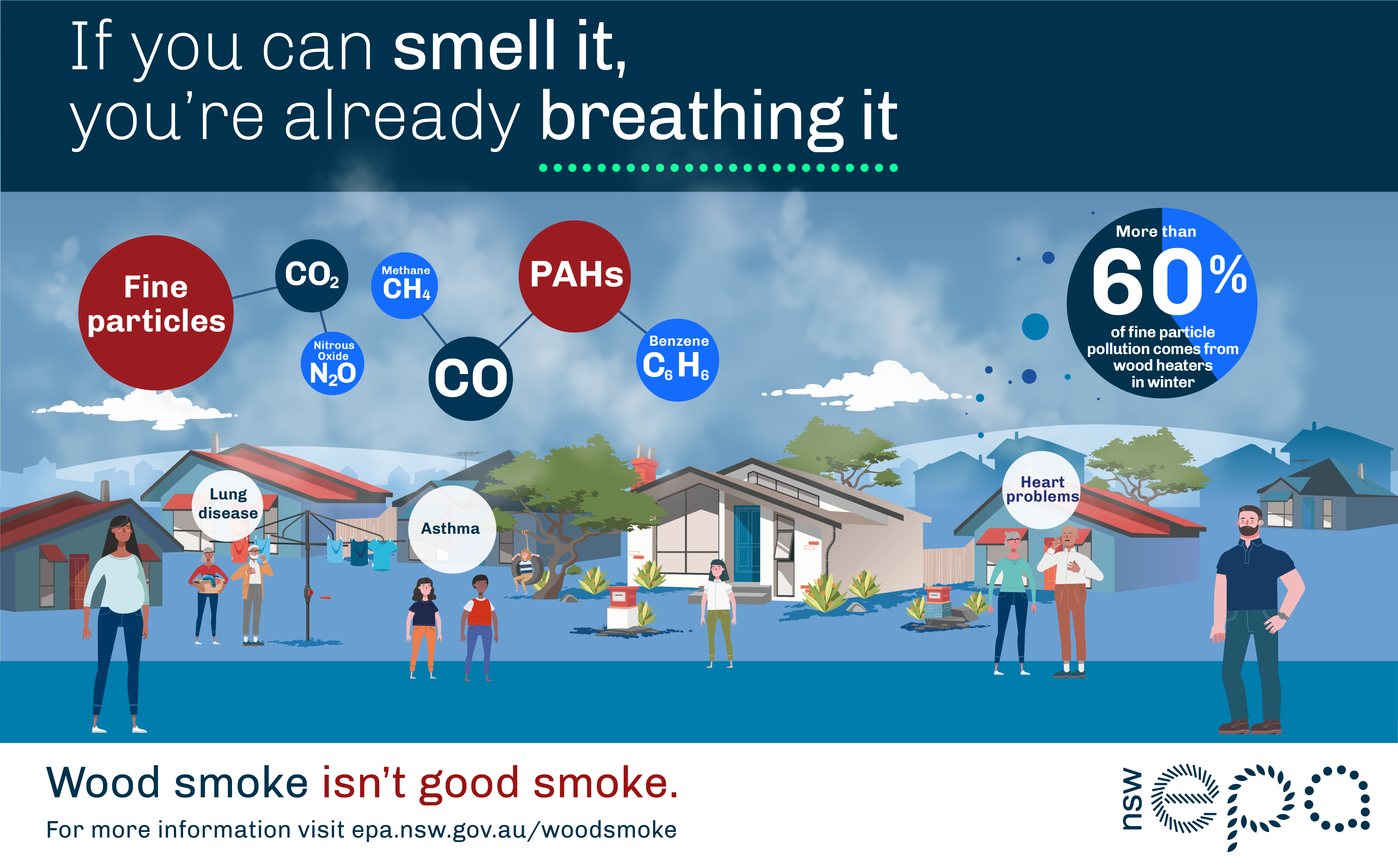
Facebook ads
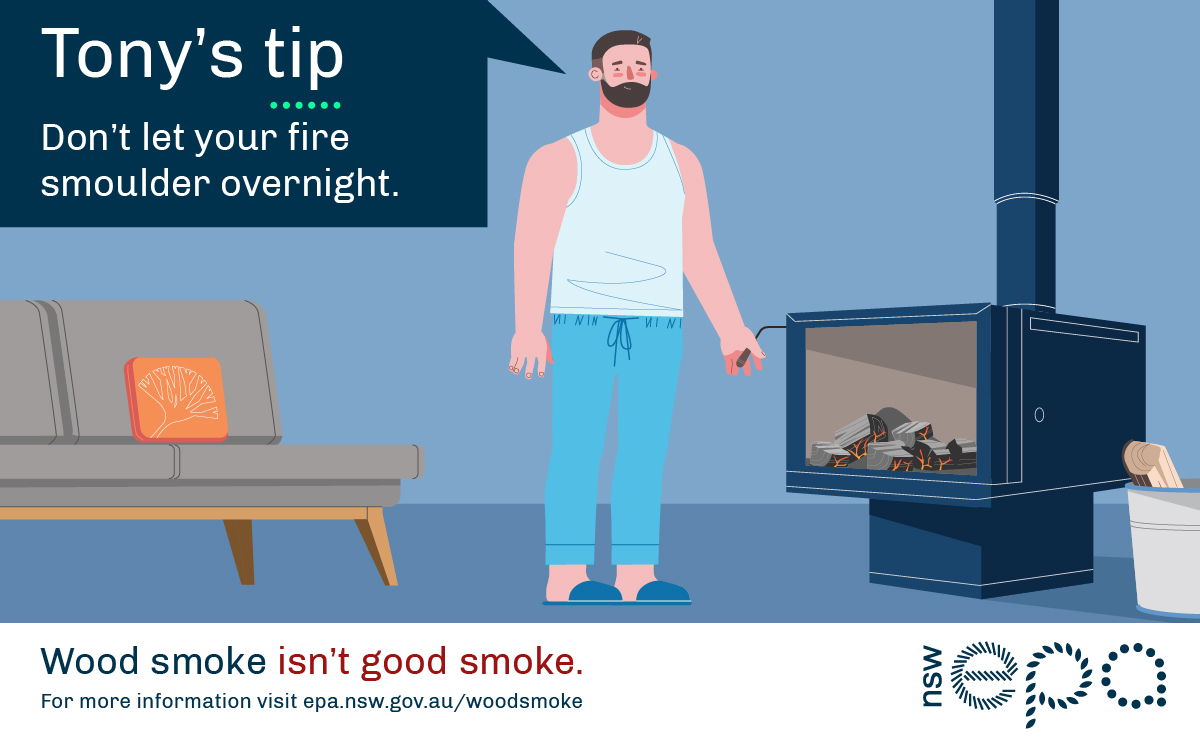
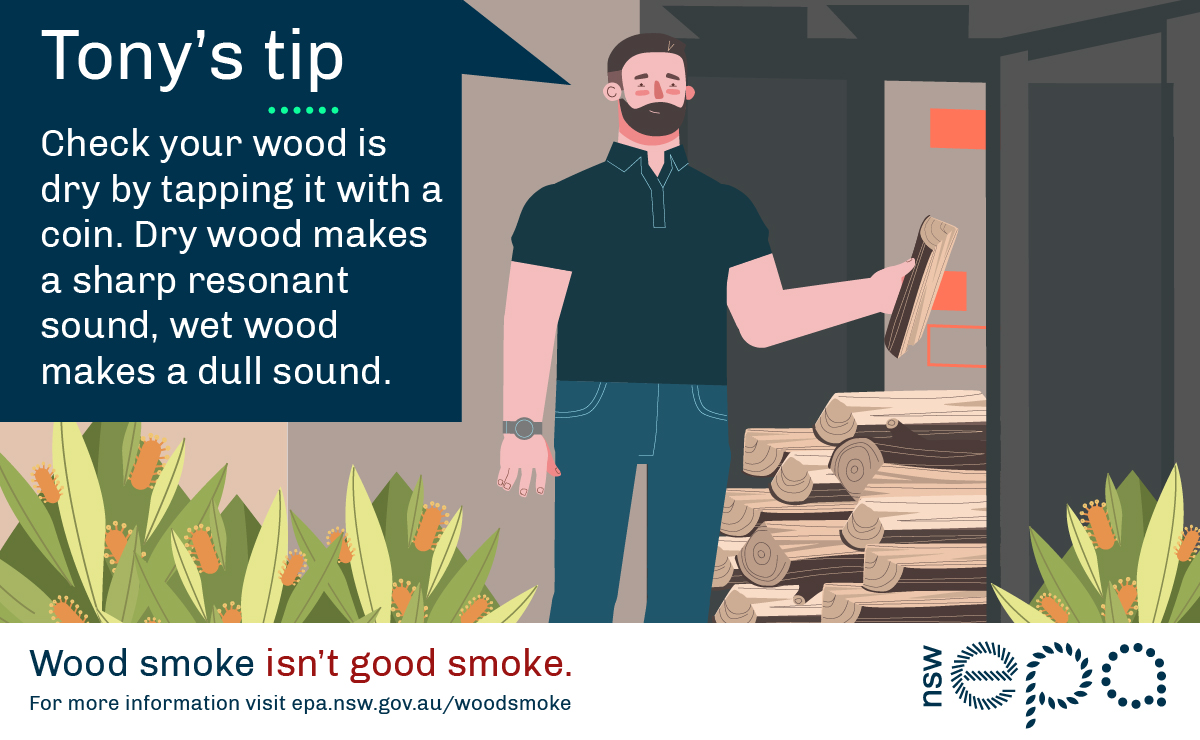
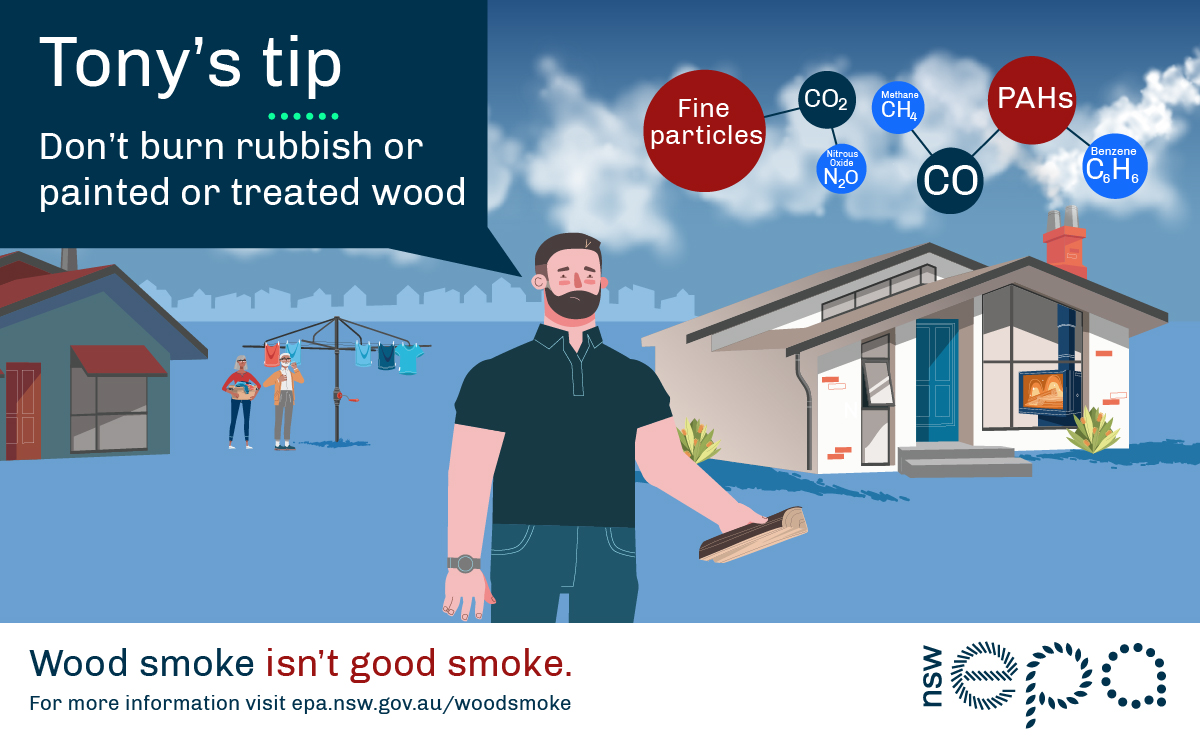
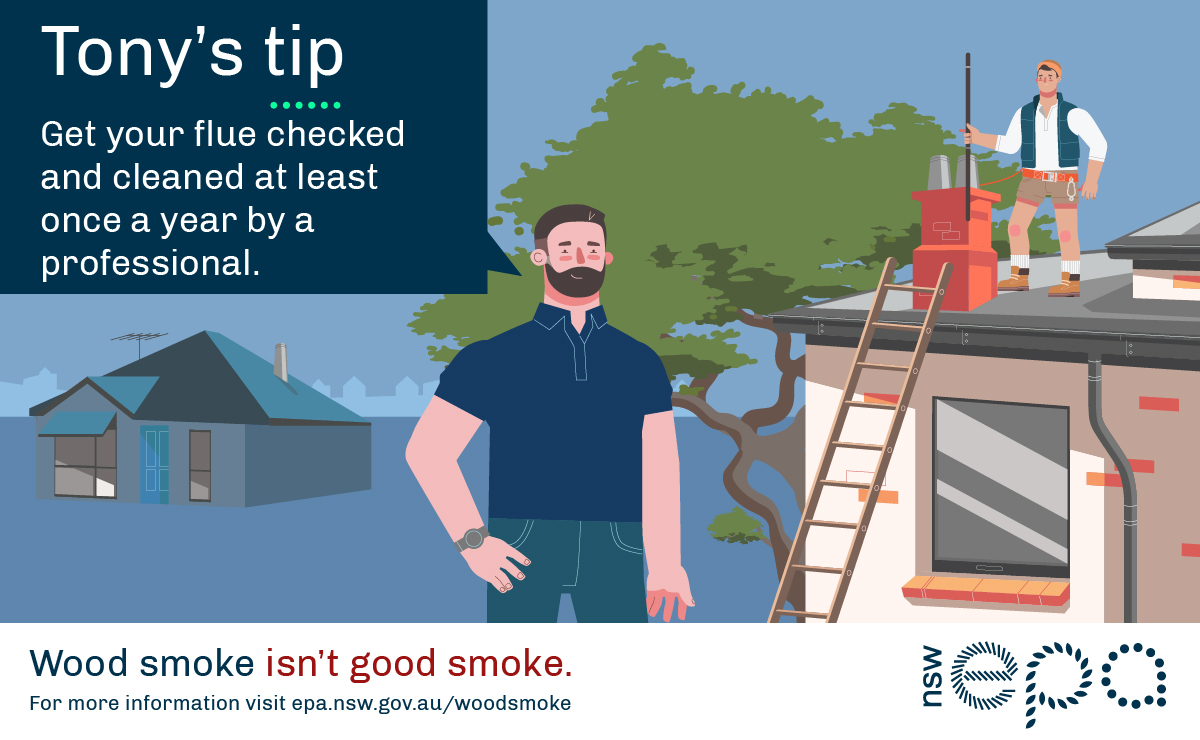
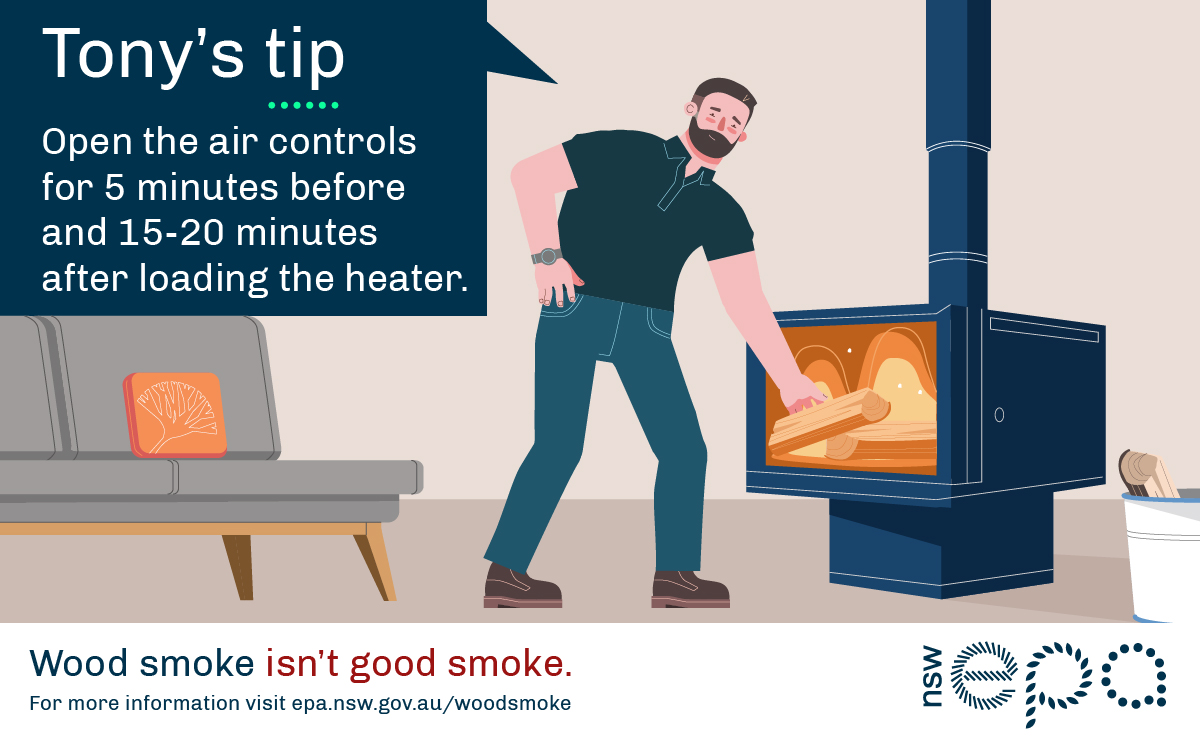
Series: Tony’s tips
- Check your wood is dry by tapping it with a coin. Dry wood makes a sharp resonant sound, wet wood makes a dull sound (JPG 430KB)
- Don’t burn rubbish or painted or treated wood (JPG 417KB)
- Don’t let your fire smoulder overnight (JPG 311KB)
- Get your flue checked and cleaned at least once a year by a professional (JPG 412KB)
- Open the air controls for 5 minutes before and 15-20 minutes after loading the heater (JPG 352KB)
Radio ads
Radio reads
The following scripts are designed to be read by an announcer. You may be able to negotiate to have the scripts read as a community service announcement free of charge. Contact your local radio station for further details.
Announcer/MVO
Suppose you could make a difference to our local environment without even leaving home, wouldn't that be worth doing?
Well, if you own a wood heater you can do just that by making sure you use it correctly and taking simple steps to reduce the amount of smoke it produces. For instance, don't let your heater smoulder overnight – keep the flame lively and bright.
To find out more contact (insert area name) council today on (insert phone number) or visit the EPA's website at www.epa.nsw.gov.au.
By reducing smoke from wood heaters we can all stay warm and breathe easy.
Announcer/MVO
Is your chimney trying to tell you something?
If it's smoking, your heater might not be operating effectively.
If you're not sure what to look for, or how you can help, get in touch with (insert area name) council and ask for advice on better woodburning. Or ask for an expert to come round and do a smoky chimney check.
By reducing smoke from wood heaters, we can all stay warm and breathe easy.
For more information call (insert area name) council on (insert phone number) or visit the EPA's website at www.epa.nsw.gov.au.
Announcer/MVO
You've probably never thought about it, but smoke from woodheaters can be a major source of air pollution at this time of year.
There are some simple ways to help reduce your heater's impact on the environment. Always burn small, aged logs of dry hardwood. Never burn treated wood or household rubbish. And regularly check your chimney for smoke.
By reducing smoke from woodheaters we can all stay warm and breathe easy.
For more information, call (insert council name) Council on (insert number) or visit the EPA's website at www.epa.nsw.gov.au.