Tackling coal mine dust
Minimising particulate pollution at coal mines is a priority for the EPA.
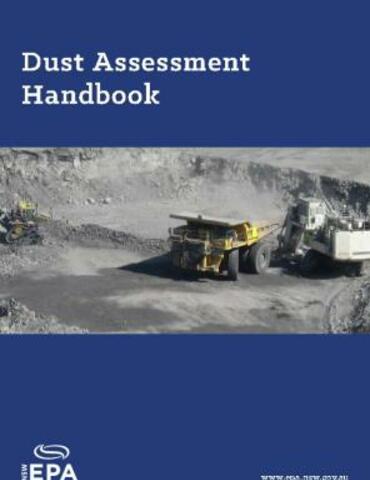
Dust Assessment Handbook
The EPA, in consultation with the mining industry and Department of Planning, Industry and Environment, has developed a Dust Assessment Handbook (PDF 792KB) to assist mine operators in the Hunter Valley to improve air quality.
The Handbook is designed for use by mining equipment operators, supervisors and superintendents and environmental regulators. The handbook
- contains photographs that illustrate when to consider operational changes to minimise or reduce dust
- assists in identifying whether mining activities are being conducted in a proper and efficient manner
- lists a series of factors to consider in assessing whether operational changes are required
- applies to vehicles on haul roads, drilling rigs and excavators, but may be updated to cover other mining activities in the future.
Upper Hunter Operation Bust the Dust
During spring 2020, the EPA is undertaking a special operation targeting Hunter Valley coal mines to tackle excessive dust levels.
Operation Bust the Dust involves frequent inspections of mines on hot, dry and windy days, to check that extra controls are in place at the mines to minimise dust.
Coal mines are required to implement procedures to reduce dust from their operations, such as by watering unsealed roads, avoiding dust-generating activities during windy weather and minimising the impact of drilling operations.
Officers are using the latest technology, including drones, to see the source of any dust and if the appropriate controls are in place.
Operation Bust the Dust similarly ran in spring and summer 2019/2020. During the operation, most mines were found to have used adequate controls on mining activities. However, due to the extremely dry and windy weather, dust was observed blowing off exposed areas on mine site.
The EPA continues to check operations frequently throughout the second year of Operation Bust the Dust and expects all coal mines to take extra precautions to control dust, particularly on high risk, windy days.
Upper Hunter Operation Dust Patrol
Commencing in 2013, the EPA worked with Hunter Valley coal mines to rationalise air quality monitoring and implement real-time continuous monitors upwind and downwind at each mine.
The EPA also worked with the (then) Office of Environment and Heritage (OEH) to develop models to predict days likely to result in high levels of dust emissions.
Using the model, the EPA ran operation Dust Patrol in spring and summer of 2018/19, undertaking targeted coal mine inspections on days where a high risk of dust generation was predicted. The focus was on spring and summer because warm dry north westerly winds are prevalent during those seasons, making it difficult to manage dust. The program reduced dust emissions but found that the model was not able to accurately predict high-risk days.
Upper Hunter Operation Dust Stop
The Dust Stop Program commenced in 2011, following one of the key recommendations from the NSW Coal Mining Benchmarking Study (PDF 4.8MB) that each mine should carry out a site-specific determination of best management practice to reduce particulate emissions from the mine site. The Dust Stop Program required mines to:
- compare current operations with international best practice and report on the practicability of implementing each best practice measure with a timetable for implementing suitable measures
- achieve 80% control of wheel generated dust
- manage mining activities to ensure elevated dust levels were not experienced during adverse weather conditions
- trial best practice measures for reducing dust when disturbing and handling soil and rock waste
- assess wind-erosion exposed areas against pre-determined benchmarks with three mines required to undertake extra stabilisation works.
Benchmarking Coal Mine Dust Controls
In 2011 a NSW Coal Mining Benchmarking Study (PDF 4.8MB) was commissioned to identify the major sources of particulate matter and best practice measures to minimise emissions from coal mines. The study made the following key conclusions
- significant reductions in emissions of particulate matter could be achieved by applying best practice control measures that were technically and economically feasible
- the top 5 sources of PM10 from GMR coal mines were wheel-generated dust, wind erosion of overburden (rock and soil), bulldozers on overburden, blasting, and trucks loading and dumping overburden
- PM10 emissions from GMR coal mines could be reduced by almost 50% with application of best practice, but at significant cost
haul roads accounted for almost 40% of PM10 emissions from mines - This study informed a range of EPA initiatives, including those listed above.
Download
Dust Assessment Handbook Dust Assessment Handbook
Download
Coal Mine Particulate Matter Control Coal Mine Particulate Matter Control